DM4Mill by delaware

DM4Mill by delaware

SAP Digital Manufacturing for the realities of the Mill Industry

DM4Mill by delaware extends SAP Digital Manufacturing with capabilities designed specifically for complex material flows, combined orders, advanced traceability, and other requirements of the Mill Industry.

The solution was developed to address the typical challenges of roll-, coil-, sheet-, and length-based production processes in SAP Digital Manufacturing. SAP Digital Manufacturing remains the technological foundation, while DM4Mill extends the SAP standard wherever industry-specific requirements call for additional capabilities and processes.

Why Mill Manufacturing is different

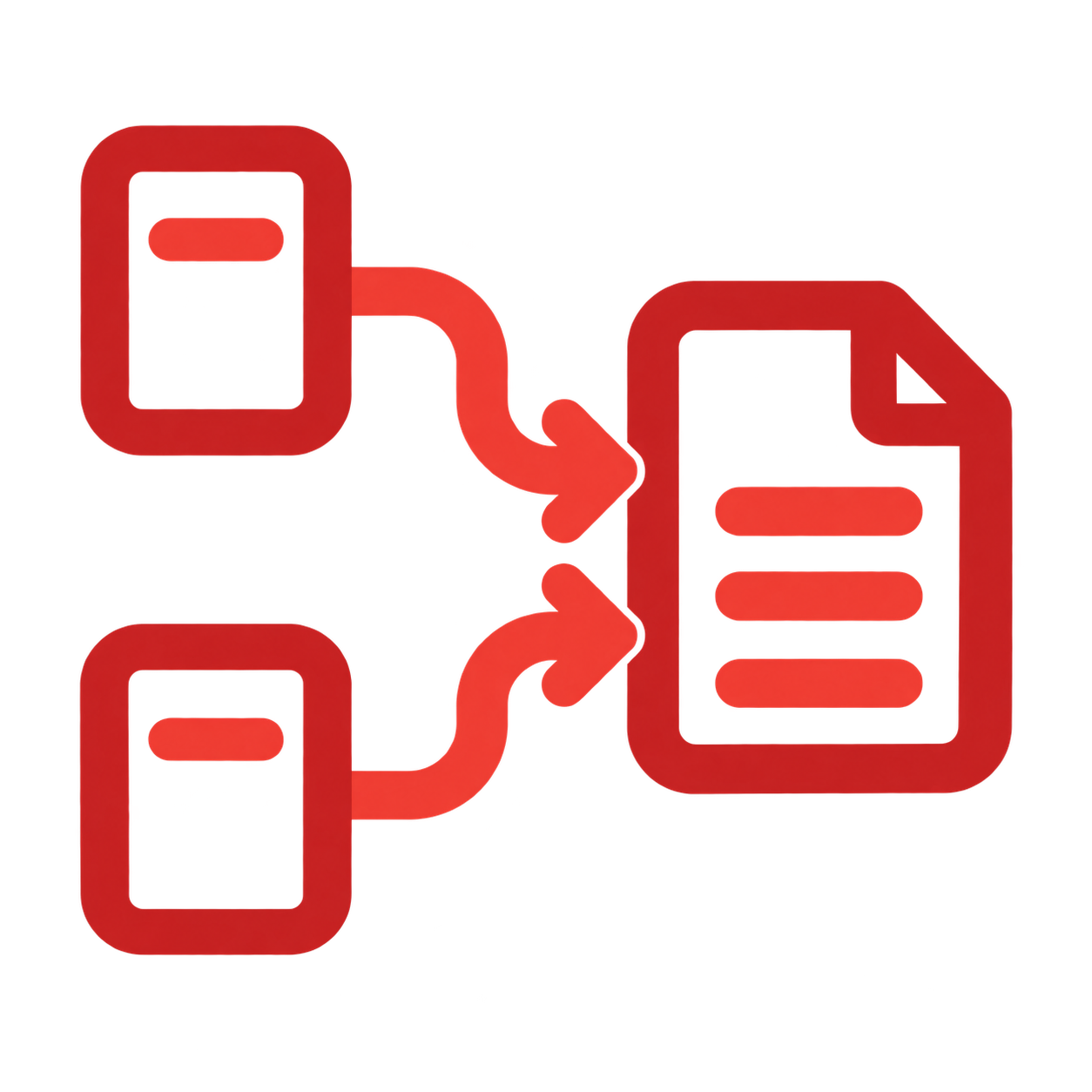
While traditional manufacturing processes often bring many components together to create one product, the Mill Industry frequently works in the opposite direction: one material stream is transformed into numerous variants, formats, and finished products.

Manufacturers need to manage complex material flows, high product variability, frequent changeovers, residual lengths, scrap, and precise traceability. At the same time, requirements for transparency, quality management, and reliable documentation continue to increase.

These challenges are particularly common in paper & packaging, plastics, metals, cable & wire, textiles, as well as other roll-, coil-, sheet-, and length-based production environments. 

Traditional single-order and batch-based models are often not sufficient for these processes. This is exactly where DM4Mill comes in.

Built for the requirements of the Mill Industry

Many Mill Industry requirements can only be addressed to a limited extent with traditional order and batch models. DM4Mill extends SAP Digital Manufacturing with capabilities for combined production scenarios, section-based material tracking, and complex material transformations. 

Combined Orders_icon

Combined Orders

Related production orders can be managed as one shared production context and executed consistently throughout the manufacturing process.

End-to-End Traceability_icon

End-to-End Traceability

Materials, sections, handling units, and production steps can be tracked across multiple stages of production.

Advanced Material Tracking_icon

Advanced Material Tracking

Material movements and transformations are captured in detail throughout the production flow.

Yield
& Waste_icon

Yield & Waste

Yield, scrap, and waste can be captured more precisely and assigned to the relevant production objects.

Quality & Non-Conformance_icon

Quality & Non-Conformance

Quality deviations can be assigned to the affected material units, while structured rework processes can be managed accordingly.

Real-Time Production Visibility & Integration_icon

Real-Time Production Visibility & Integration

Production and machine data provide up-to-date transparency and connect the shop floor, production systems, and SAP processes. 

These extensions are based on real requirements from Mill production environments and have been validated with industry experts and companies from different Mill segments and continuously developed in close collaboration with SAP.

Two core capabilities for complex Mill processes

Combined orders for efficient production groups

In the Mill Industry, related production requirements often need to be grouped in a way that optimizes the use of materials, machines, and production sequences.

Combined Orders make it possible to group related requirements into one production context while preserving the relationship between the individual orders throughout execution. This can help reduce changeovers, make better use of residual lengths, and provide greater transparency across complex material flows. 

At the same time, each individual order remains clearly identifiable, creating the foundation for consistent production control and detailed traceability.

End-to-End Traceability for complex material flows

Material flows in the Mill Industry often span multiple production stages and change through cutting, splitting, combining, or further processing.

DM4Mill enables detailed forward and backward traceability of material movements, variants, sections, and quality information throughout the production process. 

Quality deviations can therefore be linked specifically to the affected material units, improving transparency, quality management, and rework control.

Greater transparency and more efficient production processes

DM4Mill helps manufacturers integrate industry-specific production processes more closely and reduce the need for manual workarounds.

Key benefits include:

  • greater transparency across material and production flows 
  • improved material utilization and more precise yield and waste tracking 
  • more targeted quality control and rework 
  • fewer manual activities and production errors 

Preconfigured Mill-specific capabilities can also reduce the effort required compared with fully custom-built extensions. 

Introduction to DM4Mill & Demo

See how combined orders and side-by-side production are supported through the interaction of SAP S/4HANA, SAP Digital Manufacturing, and DM4Mill.

DM4Mill in action

Using a smart factory scenario, our experts demonstrate shop-floor connectivity, real-time monitoring, and the integration of industrial hardware and SAP systems. 

Developed with SAP. Clean Core in focus.

DM4Mill was developed through close software development collaboration between SAP and delaware. The solution builds on extensive experience from ERP and MES projects in the Mill Industry and has been continuously developed and validated based on concrete requirements from different Mill segments.

SAP and delaware work together on specific Mill Industry requirements for SAP Digital Manufacturing, combining SAP technology with deep industry and manufacturing expertise. 

At the same time, DM4Mill follows Clean Core principles. SAP Digital Manufacturing remains the technological foundation and is extended through a side-by-side architecture. The extensions use published SAP interfaces without modifying standard objects in SAP Digital Manufacturing or SAP S/4HANA. 

This allows DM4Mill to combine industry-specific functionality with an upgrade-ready and extensible SAP architecture.


Frequently asked questions about DM4Mill

Get started with DM4Mill

Whether you are implementing SAP Digital Manufacturing for the first time, replacing SAP ME or SAP MII, or modernizing existing manufacturing processes, we analyze your production and system landscape together and identify how DM4Mill can support your Mill-specific requirements. 

Rethinking existing PODs

When transitioning from SAP ME to SAP Digital Manufacturing, one important question is how existing Production Operator Dashboards (PODs) should be transferred to the new system landscape. Our dedicated article explains the key functional and technical aspects to consider when migrating PODs.